
GEM Engserv Pvt. Ltd is an ISO 9001:2015 certified organization, certified by TUV India in accreditation with National Accreditation Board for Certification Bodies (NABCB).
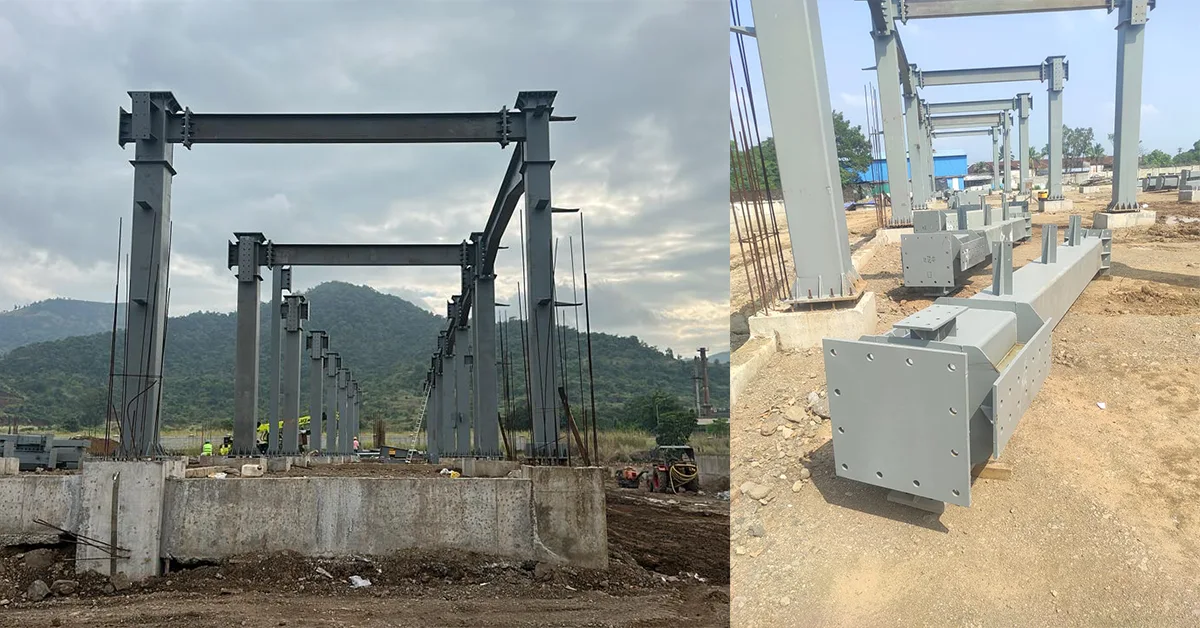
We were recently approached by two potential customers with strikingly similar problem statements, which led us to conclude that some terms specific to construction project management are often misquoted and misused. Both entities were companies from the manufacturing industry, both reputed names having massive business operations.
We need a Quality Audit for our newly completed facility
The scenario in both cases was the same – they had recently completed construction of a new manufacturing unit, and both asked for a quality audit for the completed facility.
While this is not uncommon, we have an established practice of probing deeper to understand the why rather than just settle for the what and how. As discussions unfolded, we uncovered what their real pain points were.
Their own team did not consist of any civil engineers or technical project managers which meant that they relied on external agencies for execution, supervision and control. One of them had appointed a Project Management Consultant while the other did not have any team supervising the execution. In both cases however, we were informed that there may or may not be any construction records available and that our advice shall be based on observations at the project site.
We soon realized that a Quality Audit would not completely address the customer’s problem statement.
Both firms had recently completed construction of their manufacturing units. The projects were handed over, operations were either underway or about to begin, and leadership wanted an assurance that everything had been built correctly.
Naturally, a “Quality Audit” sounded like the appropriate step. The customer also mentioned that they were advised by their management consultant to specifically get this type of an audit conducted.
However, when we explained that we would need to review and assess standard construction record set – drawings, pour cards, inspection records, material test certificates, we were informed that this type of structured information might not be available! This was our first red flag. We started asking questions to dive deeper.
As our conversation moved forward, the real concerns came to the fore. The customer had sensed that execution might not have been up to the mark and not supervised as required. One of the customers even mentioned that they had heard of a serious defect in columns during construction. We sensed that their real requirement was twofold:
Structural Stability
In simple terms, is there a safety risk to the structure in the next 1, 3 or 5 years?
Key concerns:
Financial Exposure
Did they pay more than they should have?
Key concerns:
We informed the customer that a Quality Audit would only offer a basic overview of product finish and a superficial assessment at best.
Instead, we suggested a composite diagnostic study – a combination of a structural audit and a billing review. This experience highlights an important lesson for customers as well as us: choosing the right diagnostic study begins with probing deeper with second order questions to uncover the real pain point.
Structural Audit
A Structural Audit focuses on assessing the stability and safety of the built facility. This includes:
Our audit usually concludes with prescribing the suitable rehabilitation scheme to ensure the structure can achieve desired stability. The visual inspection or NDT may be performed again after executing the rehabilitation measure, satisfying which a stability certificate may be issued.
Billing Review
The objective of such an assessment is to identify gaps in billed, built and design.
Considering that the customer was not in possession of robust construction records, this cannot be performed to the level of detailing that we would normally expect. However, we took an 80-20 approach to address this concern.
We first assessed from a benchmarking study whether a facility of this scale should need this amount to be built. Since the quick answer to this question was “no”, we dug deeper on a limited number of items – concrete and reinforcement steel – to uncover if there appeared to be a systematic overbilling. These two items contribute to nearly 50% of the cost of buildings.
Starting with the structural drawings, we calculated the total quantum of reinforcement steel and concrete that the structure should have ideally needed and identified a significant deviation – enough for the customer to start asking questions. With this, our job was done. The larger insight for us as well as for the customer was that an audit exercise must match the end goal.
On a side note, this also made us wonder why these customers got into this situation in the first place. Considering their entire operations at stake, it would seem like an easy choice to ensure optimal supervision of the facility while it is being developed rather than struggling with such diagnostic studies after it is operational. Saving a relatively small amount on PMC and supervision can turn out to be very costly.