
GEM Engserv Pvt. Ltd is an ISO 9001:2015 certified organization, certified by TUV India in accreditation with National Accreditation Board for Certification Bodies (NABCB).
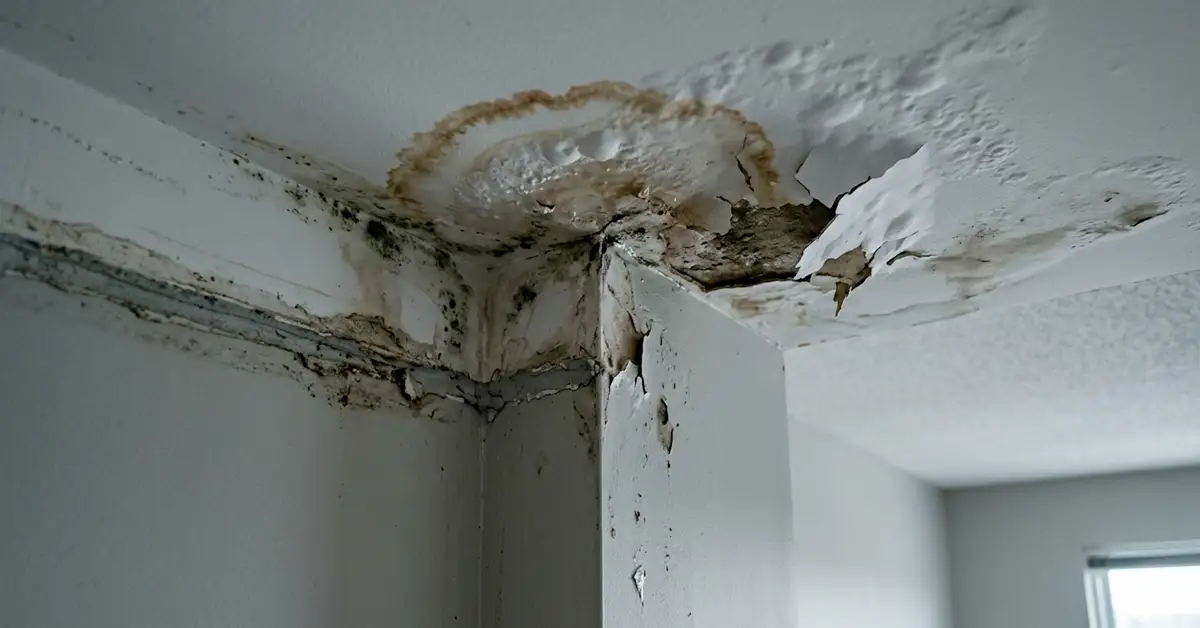
Given that this is being published in July, this is going to be a seasonal topic. The heavy monsoons in Mumbai make us all suddenly realize how vulnerable building structures are to leakages. We also observe a seasonal increase in attention towards waterproofing during this period. One of our customers reached out asking whether we can set up a Quality Management System which can guarantee no leakage in the finished buildings. What followed was an interesting conversation.
It is one of the most common misconceptions in the construction industry that waterproofing is merely the application of a membrane or coating. In reality, it is a comprehensive system in which every component must work correctly for achieving the desired outcome.
Defining the problem
The biggest gap in beginning to resolve this problem is analyzing what kind of problem it is. Waterproofing is usually a combination of a physical system and a chemical solution. Even within the physical system, there are components across the structural as well as electrical and mechanical disciplines which determine how well the building structure is protected from water.
The waterproofing system may be initiated early in the project but it is touched by multiple stakeholders across the duration of construction. Structural contractors, plumbers, façade installers, HVAC installers, landscapers, flooring contractors all interact with the waterproofing system. Poor coordination between these or a jump in desired sequence of activities can lead to puncture, discontinuity or damage that may not become apparent till the very end of execution. Usually this is too late to take any steps for rectification.
“… (unlike other construction activities), waterproofing affords no room for error!”
Margin of error
The impact of waterproofing issues is disproportionate to the effort necessary to fix issues. Water is a mighty force which exploits the smallest defects. Interfaces within the building envelope are the weakest links, the ones to watch out for being expansion joints, pipe penetrations, parapets, lift pits, basement walls and window perimeters among others. Solving the problem cannot be done by taking care of one or limited number of steps in the project. Instead, it requires careful attention to each activity that interacts with the waterproofing system.
Waterproofing on the terrace seems straightforward. However, when the vertical outlet penetrates the slab, the protective membrane needs to transition seamlessly from a horizontal surface into the vertical outlet, in spite of thermal variation, water pressure, vibration and blockage.
Similarly the plumbing running through the bathrooms require the waterproofing system to integrate with sleeves, sealants, collars and the flooring itself. Each of these vary in their behavior (expansion) in the presence of hot water. This is where workmanship needs to be of high quality and supervision is extremely demanding.
This makes waterproofing such a unique activity. Concrete may tolerate imperfections or local variations. Steel can tolerate minor fabrication errors. Architectural finishes can be cosmetically repaired or patched once identified. However, waterproofing affords no room for error! A defect measuring a fraction of a millimeter can admit water but locating and repairing it may require dismantling large parts of the completed structure.
The weakest link
Waterproofing system is only as reliable as its weakest link and we need them all to work perfectly to deliver the desired outcome. The waterproofing system (one that works) relies upon several aspects of work some of which are listed below
Any one of these going wrong may lead to a collapse of the system and jeopardizes the outcome. As an example, the best polyurethane membrane applied over a inadequately prepared concrete surface may debond within months. Similarly, a perfectly installed membrane will eventually fail if terminated incorrectly at parapet walls or service entry points.
Each building is unique
Unlike manufacturing, construction is extremely dynamic, non-standardized and deals with unique situations. No two buildings are alike even if they are designed to look the same. Components which make up a building differ in each case, making its construction practically a rethink in terms of design and implementation. Each component (basements, roof, podiums, water tanks, balconies, plumbing, piping design) need to be considered carefully for identifying vulnerabilities and developing strategies to protect against leakage. These strategies usually vary for each of the components and a single strategy just does not work. This is what most teams get wrong.
Buildings are dynamic, vulnerable structures
Unlike a product, buildings are dynamic structures which have moving and varying number of occupants, exposure to sunlight, heat and rain as well as seismic and wind loads. A building is designed with a certain purpose in mind which continuously varies and eventually creates vulnerabilities. The structure also invariably settles eventually which is why the design is only a best fit for the given site conditions even with the factor of safety built into the specifications and calculations.
Expert ecosystem
One way to solve a tricky problem is to get an expert to assess the root cause and suggest corrective actions for it. When it comes to waterproofing, we look around but find no standalone experts in this domain (at least not anyone who has academic and on-ground experience). Waterproofing experts engaged by product suppliers are typically Chemical Engineers or scientists who have studied chemistry. Look around the organization and you will quickly realize that developers and contractors do not employ any such personnel. Also, unlike some other niche disciplines like geo-technical study, post-tensioning, façade, there are no waterproofing experts per se who can be relied upon to resolve issues.
While we have tried to showcase why and how this activity is so challenging to get right, there are some processes and philosophies which have resulted in protecting the building structure reasonably well. We shall uncover these in one of the upcoming articles. If you have established or experienced a solution that works, we will be happy to collaborate and bring out your experience through our next publication on this topic (with due credits of course).