
GEM Engserv Pvt. Ltd is an ISO 9001:2015 certified organization, certified by TUV India in accreditation with National Accreditation Board for Certification Bodies (NABCB).
While a layman considers buildings and bridges to be very different, a Civil Engineer initially sees striking similarities. Both are built using concrete, steel and foundations. Both are expected to resist gravity, wind and earthquakes. Both rely on structural analysis, engineering judgement and national design codes. It is therefore natural for many project owners to assume that structural engineering is a single discipline that can be applied equally to either type of project.
In reality, buildings and bridges represent two distinctly different philosophies of engineering. Their objectives, loading patterns, construction methods, maintenance requirements and expected performance differ so fundamentally that expertise in one does not automatically translate into expertise in the other.
Understanding these differences is useful not only for engineers but also for developers, industrial clients, government agencies and infrastructure owners. It helps them appreciate why structural design is about much more than calculations and why quality management plays a vital role in transforming a technically adequate design into a successful long-term asset.
The purpose of a building is to create spaces where people can live, work, learn, shop or manufacture. Architecture, functionality, services and user comfort all influence the structural layout.
A bridge has a different mission. It exists to transport people, vehicles or trains safely and efficiently across an obstacle. Road geometry, railway alignment, river hydraulics, navigation clearance and traffic safety largely dictate its form. In buildings the structure often adapts to architecture; in bridges the architecture generally emerges from the structure.
Buildings mostly experience static or slowly varying loads. Bridges carry thousands of moving wheel loads every day. Every passing truck or train changes the internal force pattern. Consequently, bridge engineers pay far greater attention to moving load effects, fatigue, dynamic behaviour and long-term durability.
Another striking difference is movement. Buildings are generally restrained and excessive movement is undesirable. Bridges are intentionally designed to move due to temperature changes, creep, shrinkage, braking forces and earthquakes. Bearings and expansion joints therefore become critical structural components rather than accessories.
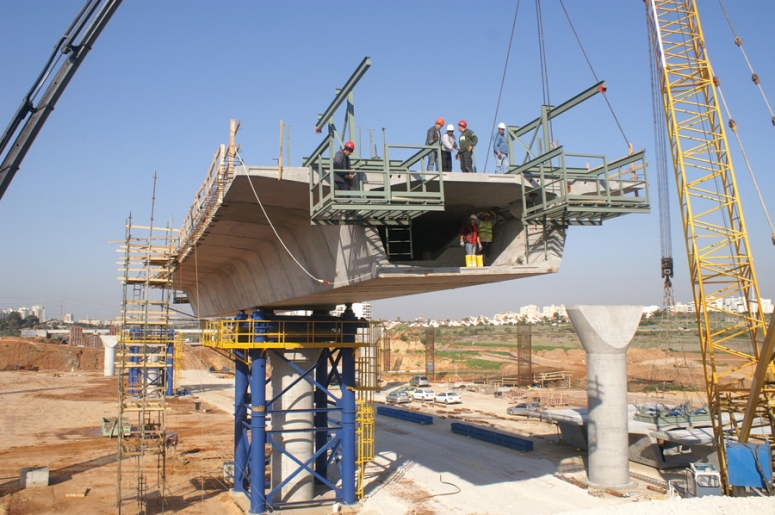
A good structural engineer never stops at analysis. The design must also be buildable. Most buildings are constructed floor by floor in repetitive cycles. Modern bridges may be launched, lifted, erected segmentally or built using balanced cantilever construction while traffic or rivers continue beneath them. Temporary stages often become as critical as the completed structure.
The best drawings therefore anticipate construction sequencing, tolerances, access, inspection requirements and safety. When this thinking is absent, contractors face ambiguity, delays, excessive rework and unnecessary claims.
Many people equate structural design with satisfying design codes. Codes are essential, but they establish minimum requirements rather than guaranteeing project excellence.
True engineering quality asks additional questions. Can reinforcement actually be placed? Can concrete be vibrated effectively? Can bearings be inspected twenty years later? Will waterproofing details remain accessible? Can maintenance be carried out safely without major disruption?
These questions rarely appear in analysis software, yet they determine how the asset performs throughout its service life.
The strongest structural organisations are those that close the feedback loop between design and execution.
Construction supervision, quality audits, peer reviews, forensic investigations and rehabilitation projects expose engineers to realities that cannot be learnt from textbooks alone. They reveal recurring detailing mistakes, constructability issues, durability concerns and maintenance challenges.
Every field-based observation becomes knowledge. Every defect investigation and diagnostic work improves future detailing. Every quality or structural audit sharpens drawing quality and constructability analysis. Every rehabilitation project teaches lessons that influence the next design.
Design informs construction. Construction informs quality management. Quality management strengthens future design. Over time this continuous learning cycle produces clearer drawings, fewer site queries, reduced rework and more reliable assets.

Owners invest in structures that are expected to serve for decades. Their real concern should not only be whether a design satisfies today’s calculations but whether it will continue delivering value throughout its life.
Designs informed by quality management reduce execution risks, improve coordination between disciplines, simplify inspection, enhance durability and lower life-cycle costs. They also reduce uncertainty during construction because practical experience has already influenced the detailing and specifications.
Selecting a structural consultant should therefore involve more than reviewing software capability or project size. Owners should ask whether the consultant understands how designs behave on site and how they perform years after handover.
Buildings and bridges may share the same materials, but they demand different engineering philosophies. One creates spaces for people; the other keeps communities and economies connected. Each deserves specialized expertise.
Yet they also share one common truth: outstanding structures are created when sound engineering is reinforced by quality management. Calculations establish safety, but experience refines judgement. Drawings guide construction, but feedback from construction improves future drawings. Quality management is therefore not a downstream activity—it is an integral part of engineering excellence.
The most valuable structural consultants are those who see the complete lifecycle of an asset: concept, design, detailing, construction, inspection, maintenance and rehabilitation. By integrating lessons from every stage into future projects, they deliver structures that are not only safe and economical, but also practical to build, easier to maintain and capable of serving society for generations.
In the end, successful structural engineering is measured not merely by whether a building stands or a bridge carries traffic. It is measured by the confidence it inspires throughout the life of the asset.
Aspect | Buildings | Bridges |
Purpose | Create usable spaces | Carry movement safely |
Dominant loading | Mostly static | Moving concentrated loads |
Movement | Restrained | Deliberately accommodated |
Construction | Repetitive | Often staged/segmental |
Serviceability | Comfort & crack control | Ride quality & durability |
Maintenance | Access within building | Traffic-sensitive inspections |
Quality focus | Coordination & detailing | Bearings, prestressing, alignment, durability |